Machines are getting better at looking at images and explaining what they see. But there's something even more interesting happening now: they're starting to describe unfamiliar images without being trained on them. This is what we call zero-shot image-to-text generation. And BLIP-2 is one of the models making this possible. If you've never heard of it or if it sounds complicated, don't worry. We're going to walk through what it does and why it matters, without getting lost in jargon.
What Is Zero-Shot Image-to-Text, and Why Does It Matter?
Traditionally, AI models had to be trained on a specific type of data to get any decent results. If you wanted a model to caption photos of animals, you had to show it thousands of labeled animal pictures. But zero-shot generation flips this idea. Instead of needing a specific example to learn from, it uses general understanding to describe new things it’s never seen before.
It’s like showing a child a picture of a platypus. Even if they’ve never seen one before, they might say, “It looks like a mix between a duck and a beaver.” That’s not wrong — it’s just how they make sense of something new. BLIP-2 does something similar, but with machines. And instead of guessing randomly, it draws on what it’s already learned from a wide mix of language and image data.
So, what makes BLIP-2 worth talking about? It doesn’t just guess captions. It links what it sees with what it knows in a clean and clever way. And it can do that without needing to start from scratch every time.
How BLIP-2 Gets the Job Done
At its core, BLIP-2 follows a clear three-step approach. But the magic lies in how well these steps work together. It’s not flashy — it’s just smart and efficient.
1. Breaking the Image Down with a Visual Encoder
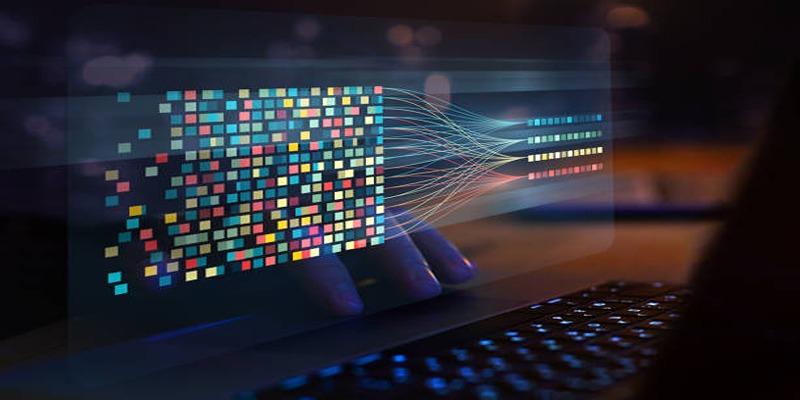
The first step is all about understanding the image. BLIP-2 uses a visual encoder, often built with a model like ViT (Vision Transformer), to look at every part of the picture. It's a bit like scanning a room before speaking about it. The encoder takes in the raw image and transforms it into numbers — embeddings — that represent what's inside.
These embeddings aren’t descriptions yet. Think of them as notes. The AI is basically saying, “Here’s what I noticed: some shapes here, some colors there, something that might be a face.” At this stage, there's no full sentence. Just raw input waiting to be processed further.
2. Bridging the Gap with a Querying Layer
Next comes what’s known as the Q-Former — this is where things start to get more interesting. Instead of passing every detail directly to the language model, BLIP-2 uses a fixed number of query tokens to ask smart questions about the visual data.
Why does this matter? Well, it avoids the overload problem. If you dump too much information into a language model, it gets messy. Instead, Q-Former acts as a filter. It picks out what's relevant and shapes it in a way the language model can understand. So rather than feeding it every pixel, it might say: “This object has fur, two legs, and a long tail — what could it be?”
This step also helps keep the model light and fast. And more importantly, it prepares it for zero-shot work, where it's expected to make sense of new images without any special training.
3. Generating Text with a Language Model
Once the queries are done and the key points are ready, they’re passed along to a language model like FlanT5. This is where the actual sentences come out. The model looks at the processed visual cues and comes up with a caption — or a full answer if you’re doing something like visual question answering.
But here's where BLIP-2 really shows its strength: it doesn’t need extra tweaking for every new task. Because the language model has already been trained on a wide range of text tasks, it can take these visual hints and turn them into natural-sounding responses.
So, if you show it a strange new gadget or an animal hybrid, it won’t panic. It’ll fall back on what it knows and give you something sensible, even if it’s not perfect. And that’s exactly what zero-shot means — doing something useful, even when it’s completely new.
Real Uses That Are Already Happening
BLIP-2 might sound like it belongs in a research lab, but it’s already being put to work. Think of systems that need to tag images without any prior setup. That includes social platforms trying to auto-caption photos, museum apps giving context to art, or even tools for the visually impaired that describe the world out loud.
In many of these cases, the challenge is the same: no two images are exactly alike. That’s where zero-shot shines. It’s not just faster — it’s more practical. You don’t need a custom model for every new situation. BLIP-2 takes the general knowledge and runs with it.
And because it doesn’t lean too heavily on one training dataset, it's less likely to overfit or miss the point in real-world photos. That means fewer surprises and more dependable output.
In Closing
BLIP-2 isn’t about showing off the biggest model or the most layers. It’s about getting better results with a cleaner design. And in a space where every new tool feels overcomplicated, that’s refreshing.
It understands images, filters out what matters, and then speaks in ways we understand — even when the image is totally new. That’s the heart of zero-shot generation. And BLIP-2 is one of the models doing it right, not by being louder, but by being smarter with what it already knows. Hope you find this info worth reading. Stay tuned for more.