Why structure is the bottleneck in molecular work
You can often move quickly from a gene to a purified protein, but meaningful mechanistic work tends to slow down when you ask a simple question: what shape is it in? Structure sits underneath everyday decisions—where to mutate, which residues define specificity, whether two partners can plausibly bind, or whether a new assay is even reporting on the intended site. Without a credible 3D model, teams rely on indirect hints and trial-and-error.
The bottleneck is rarely motivation; it’s throughput and conditions. X-ray crystallography and cryo-EM can be decisive, but they demand time, specialized expertise, and proteins that behave well. NMR is powerful for dynamics but scales poorly with size and effort. Even when a structure lands, it may represent one state among many, missing flexible regions or condition-specific conformations that matter in cells. That gap is where prediction becomes tempting—and where careful use matters.
What AlphaFold actually outputs, and what it doesn’t
In practice, AlphaFold gives you a 3D atomic model of a protein chain: coordinates for most residues, a predicted alignment error matrix, and per-residue confidence scores. That means you can usually get a plausible fold, domain organization, and many secondary-structure elements without waiting on months of experimental work. For routine analysis, the output behaves like a structure file you can visualize, measure, and use to map variants or design truncations.
What it doesn’t provide is a guarantee of the biological state you care about. It is not directly telling you which conformation dominates under a specific ligand, membrane environment, post-translational modification pattern, pH, or oligomeric assembly. Disordered regions may be modeled but are often uncertain, and active-site geometry can be subtly wrong even when the overall fold looks right. Treat it as a strong starting hypothesis—one that still carries costs if you build assays, mutants, or chemistry around the wrong state.
Trust signals: reading confidence before making real decisions

A typical failure mode is treating “the model looks reasonable” as enough. AlphaFold tries to warn you, and you can read those warnings before you commit real time to cloning, mutagenesis, or screening. The first check is per-residue confidence (pLDDT). High scores usually mean you can trust local geometry for things like helix placement, domain boundaries, and many side-chain neighborhoods; low scores often flag loops, termini, and intrinsically disordered segments where “structure-based” interpretations become guesswork.
The second check is the predicted alignment error (PAE), which is less about whether a residue is folded and more about whether the relative placement of domains is reliable. A protein can have high pLDDT within each domain but still have uncertain domain-to-domain orientation, which matters for interfaces, allostery, and pocket formation at domain junctions.
The confidence is not the same as correctness for function. A high-confidence model can still miss the ligand-bound state, a metal coordination geometry, or a transient pocket—mistakes that show up later as wasted assay cycles and misleading SAR. Use confidence to decide what to treat as solid versus what needs an orthogonal check.
Where AlphaFold saves the most time in a workflow
A familiar pattern in early target work is burning weeks just to answer basic “where is it” questions: which parts are soluble, where domain boundaries sit, whether an N- or C-terminal tag is likely to be tolerated, and which constructs are worth expressing. A decent AlphaFold model often collapses that search space. Teams can pick truncations that respect domain architecture, avoid long low-confidence tails, and place point mutations with a clearer idea of whether they will destabilize the fold or simply perturb a surface.
It also speeds up interpretation once data starts arriving. You can map sequence conservation, patient variants, or resistance mutations onto a 3D context quickly, then decide which ones are likely to affect a pocket, an interface, or overall stability. For antibody and binder projects, the model can help choose epitopes that look exposed and structurally coherent rather than betting on peptides or loosely defined regions.
The “time saved” can flip to “time wasted” when the decision hinges on a specific state—an induced pocket, a catalytic geometry, or a regulated domain arrangement. That’s where a model should guide what to measure next (HDX-MS, mutational scanning, SAXS, cryo-EM), not replace it.
Drug discovery reality check: targets, pockets, and ligands
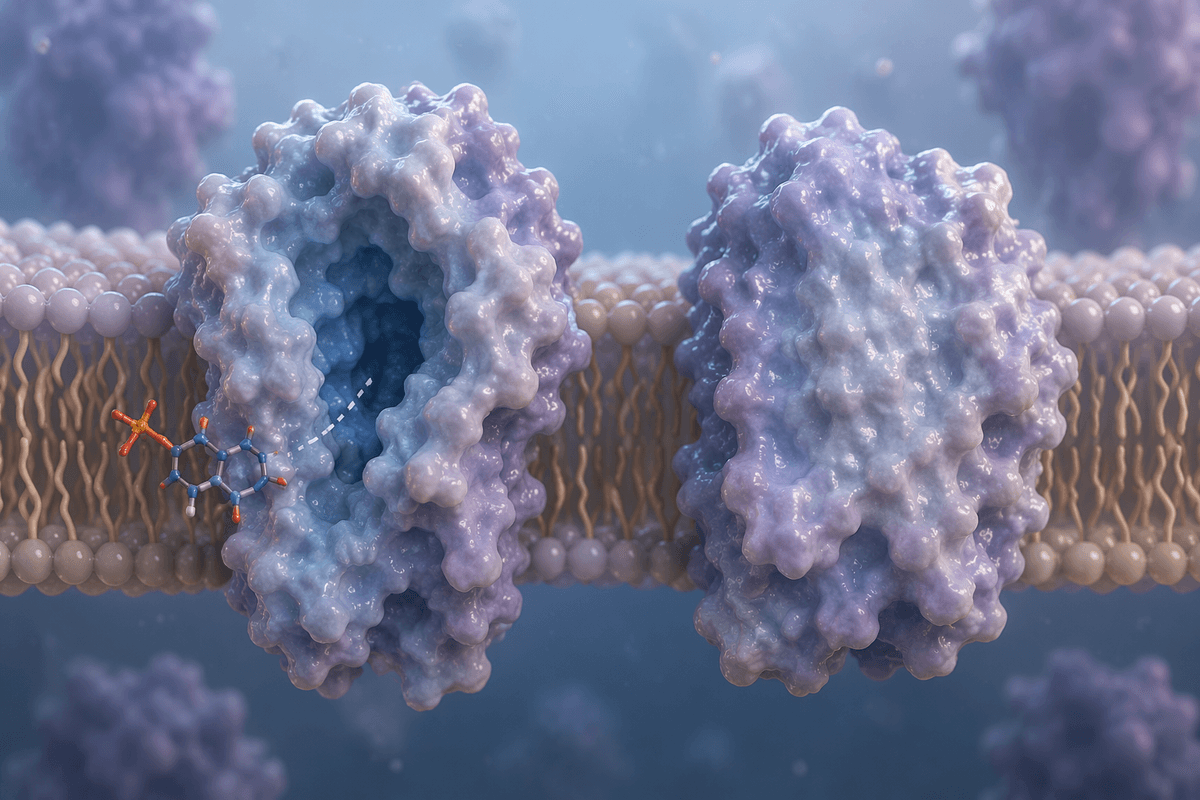
In medicine discovery, the first practical question is rarely “is the fold right?” but “does this model help me find a tractable pocket on a target that matters?” AlphaFold can accelerate target triage by showing whether a protein has a recognizable enzyme-like core, a plausible ligandable cavity, or instead a flat protein–protein interface with few obvious footholds. It can also help you sanity-check where known mutations, catalytic motifs, or conserved residues land relative to a suspected binding site.
The most useful binding site may appear only in a specific conformation, with a cofactor present, in a membrane, or upon partner binding. A high-confidence backbone does not guarantee the side-chain rotamers, water networks, or metal coordination that drive potency and selectivity. For ligands, docking into a single predicted structure can produce clean-looking poses that collapse when you test them.
Used responsibly, the model earns its keep by narrowing hypotheses: which pockets are worth biophysical validation, which constructs might crystallize, and which assays are likely to report on the same site your chemistry is targeting.
Complexes and conformations: when prediction gets tricky
You see the limits fastest when the biology depends on partners or motion. Many proteins are only “complete” when they bind something else—an obligate dimer, a regulatory subunit, a nucleic acid, a membrane, or a chaperone. A single-chain prediction can look tidy while the real functional surface is formed at an interface, or while key helices only stabilize upon binding. Even when complex prediction works, a sharp-looking interface is not proof of the correct stoichiometry or that the proteins meet in that arrangement in cells.
Conformation is the other trap. Transporters, GPCRs, kinases, and multi-domain enzymes often shift between states that differ in pocket shape and accessibility. AlphaFold will tend to give you a plausible state, not a menu of states, and the PAE can hide the real issue: domains may be individually confident but positioned in a way that closes the pocket you need (or invents one that doesn’t exist). The practical cost is experimental drift—assays, constructs, and docking campaigns tuned to a convenient model state rather than the relevant one.
When the question is “does it bind, and in which state,” treat prediction as a scaffold for targeted checks: compare to homolog structures, run quick ensemble or alternative-state sampling, and use low-commitment experiments (SAXS, HDX-MS, crosslinking-MS, mutational epistasis) to confirm interfaces and domain rearrangements before you optimize chemistry or build a long screening funnel.
A practical playbook for using AlphaFold responsibly
A practical way to use AlphaFold is to decide upfront what you’re using it for: construct design, mutation planning, interface hypotheses, or pocket scouting. Start by masking low-pLDDT regions from “structure-based” decisions, then use the PAE to judge whether domain orientations and inter-domain pockets are stable enough to act on. Treat side-chain details, metals, waters, and induced pockets as provisional unless you have supporting evidence.
When the model drives a high-cost commitment—screening, lead optimization, or a major assay build—add an orthogonal check: compare to homologs and known motifs, run alternative-state or ensemble sampling, and validate with targeted experiments (HDX-MS, SAXS, crosslinking-MS, cryo-EM, or mutational scans). The operating rule is simple: use predictions to narrow options, not to eliminate measurement.