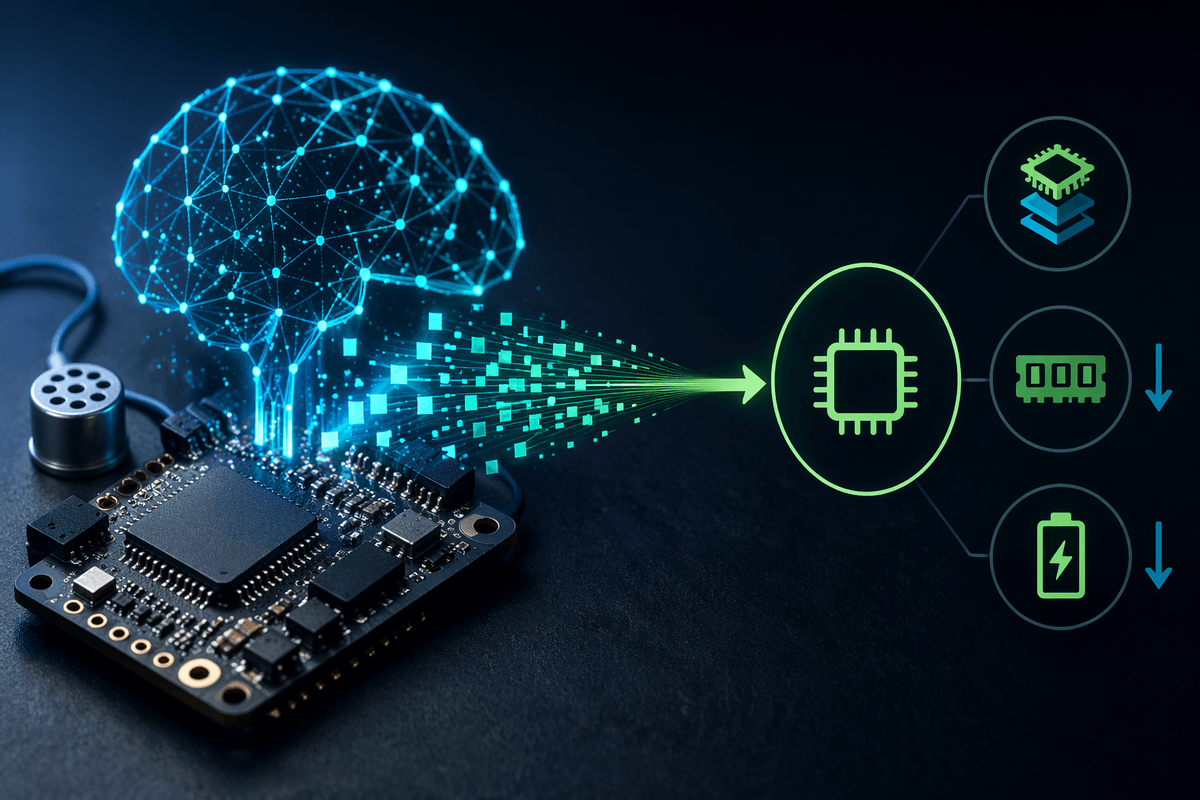
Why battery progress feels slow—and where AI fits
If you’ve shopped for an EV or read about grid storage, you’ve seen the same promises repeat: higher range, faster charging, lower cost. Progress is real, but it can feel slow because batteries are not one invention—they’re a chain of materials, manufacturing steps, and safety margins that all have to work together at scale.
Most “new” ideas fail for ordinary reasons: a material is hard to make consistently, a reaction creates unstable byproducts, or performance fades after hundreds of cycles. Even when a cell looks great in a lab coin cell, proving it’s safe and durable in large formats can take years.
AI fits as a way to narrow guesses—ranking which chemistries, additives, and process settings are most worth testing—so teams spend fewer cycles on dead ends. It can cut search and iteration time, but it can’t skip validation, supply constraints, or factory realities.
The real choke points: materials, interfaces, and validation time
A familiar pattern in battery headlines is that a “breakthrough material” gets the credit, but the bottlenecks are often more mundane. The first is materials that are available, affordable, and consistent at industrial volumes. A cathode or electrolyte that works in grams may rely on precursors that are scarce, moisture-sensitive, or require tight purity control that quietly raises cost.
The second choke point is interfaces—the thin contact regions between cathode, electrolyte, anode, and the separator—where many failures actually start. Tiny changes in coatings, particle morphology, or formation protocols can shift whether a stable protective layer forms or whether side reactions keep consuming lithium and building gas.
The third is time. Cycle life, calendar aging, fast-charge behavior, and abuse safety don’t reveal themselves in a weekend. Even with accelerated tests, proving reliability across temperatures, lots, and cell formats is a long, expensive validation loop that AI can inform but not eliminate.
How AI narrows the search space for new chemistries
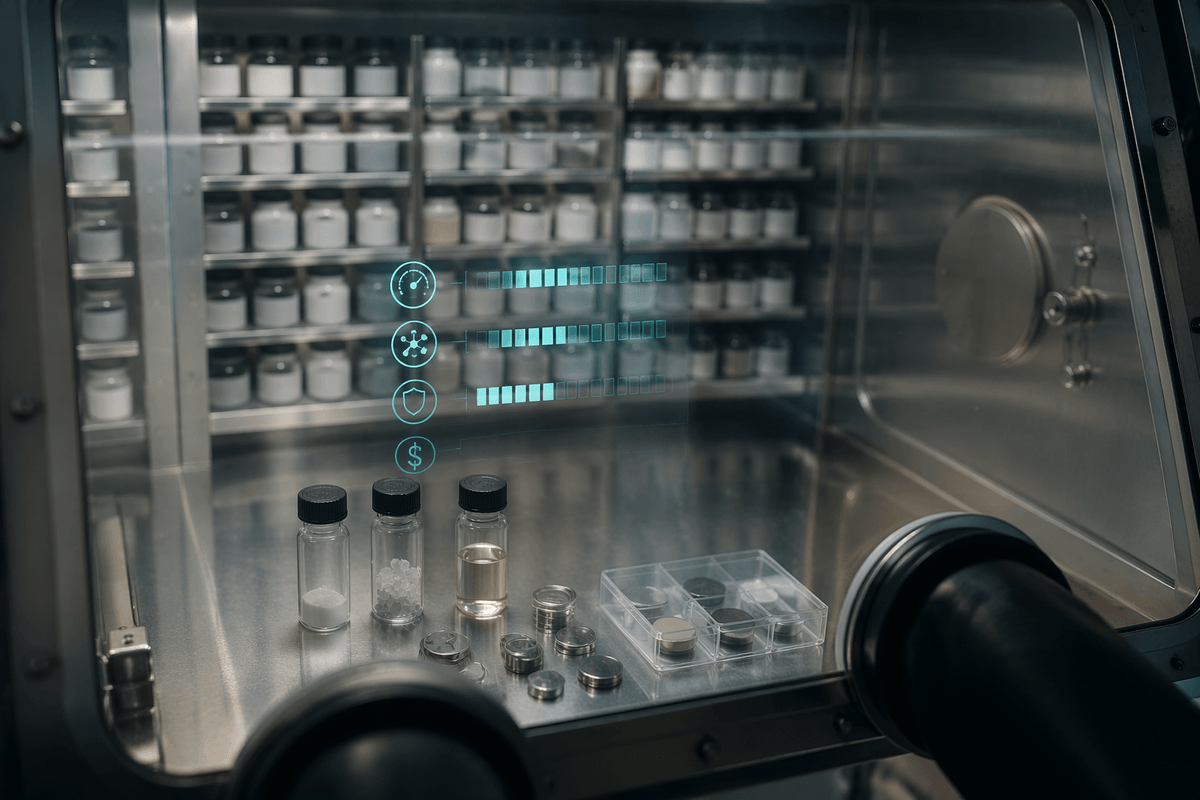
Picture a lab deciding between dozens of cathode recipes, electrolyte salts, and additives. The combinatorics explode quickly: changing one solvent blend or coating can interact with particle size, formation steps, and operating voltage in ways that make “try everything” impossible.
AI helps by acting like a fast triage layer. Models trained on prior experiments and simulations can predict which candidates are more likely to hit target properties—voltage window, ionic conductivity, stability, or cost—and which are likely to fail early. Generative approaches can also propose new molecules or compositions, but the practical win is ranking: turning a million plausible options into a short list that deserves scarce glovebox time and expensive characterization.
Many “promising” chemistries depend on hard-to-source precursors, tight dryness control, or synthesis steps that don’t translate cleanly beyond small batches, so teams often add manufacturability and supply filters before they ever mix the first vial.
From lab to line: using AI to cut iteration loops
A common moment where battery programs bog down is after a “good” lab result, when engineers have to translate it into a repeatable process: slurry mixing, coating thickness, drying profile, calendering pressure, electrolyte fill, and the first formation cycles. Each knob interacts, and small shifts can change porosity, wetting, gas generation, and early capacity loss. Without help, teams often run long, expensive design-of-experiments campaigns just to rediscover a narrow operating window.
AI is increasingly used as a guide for these process loops. Given historical run logs and metrology—viscosity, particle size, moisture, coating uniformity, impedance—models can suggest the next most informative experiments, flag settings likely to create scrap, and predict which lots may fail later based on early signals. That can compress months of trial-and-error into fewer, better-chosen runs, especially when paired with fast, inline measurements.
But the lab-to-line gap doesn’t disappear. Many factories lack clean, well-labeled data across tools and shifts, and changing a protocol can mean re-qualifying equipment, retraining operators, and accepting short-term yield loss. AI can reduce the number of loops, yet the loops still have to be closed on real machines, at real throughput.
Data reality check: what you need for AI to work
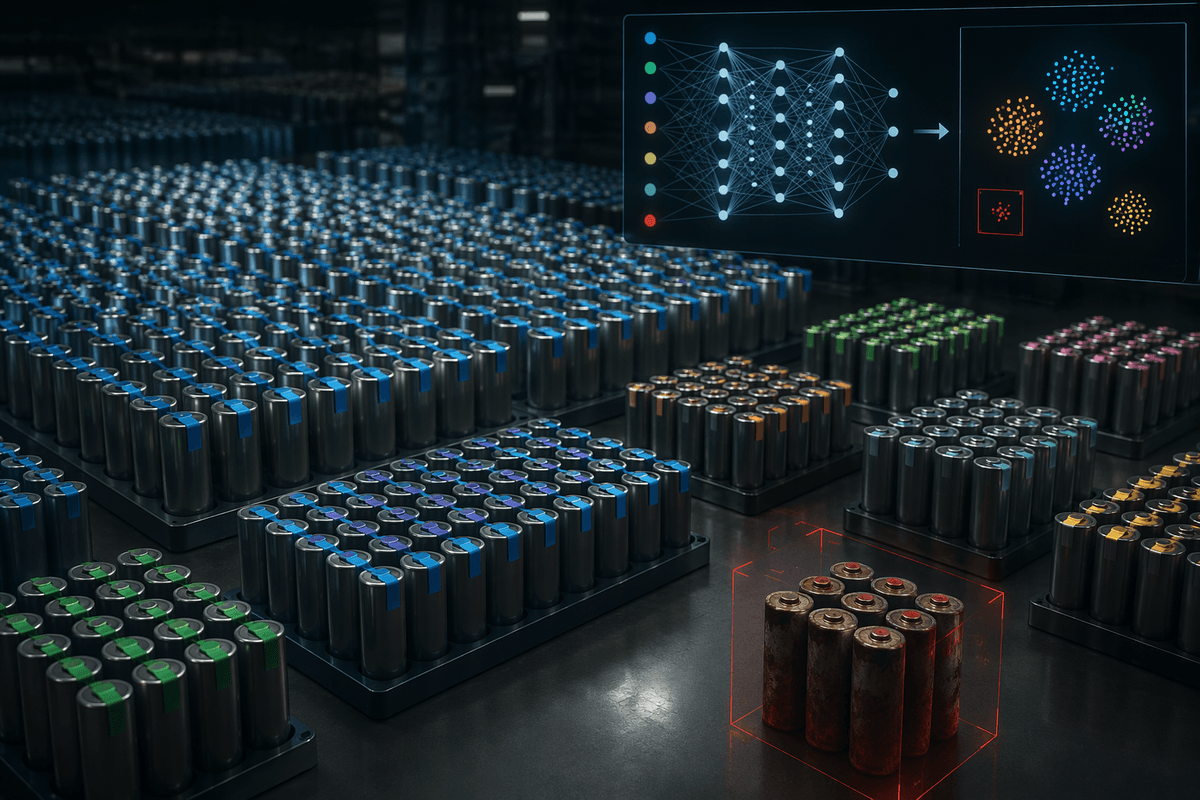
Most battery AI work rises or falls on whether the data reflects how cells are actually made and tested. A spreadsheet of “good” coin-cell results is rarely enough, because models learn from variation: controlled changes in formulation, process settings, and test conditions, plus the outcomes. That means consistent metadata (temperatures, cutoff voltages, formation protocols), traceability across lots, and a way to link early measurements—impedance, gas signals, thickness, moisture—to later failures.
Teams also need disciplined labeling. If “capacity fade” is measured with different rest times or cycling rates, the model will treat the noise as physics. Cleaning this up costs time and money: sensors, calibration, data pipelines, and people who can reconcile mismatched lab notes with instrument logs.
Even with perfect hygiene, coverage matters. If you only have data from one supplier, one line, or one season of humidity, the model may look impressive until it meets a new batch. The practical bar is not “big data,” but data that is comparable, complete, and representative of the decisions you want to automate.
Where AI struggles: safety, lifetime, and surprises
Anyone who has watched a battery program stumble knows the painful part is rarely “Does it work?” but “Does it keep working, safely, for years?” AI is weakest when the important outcomes are rare, delayed, or triggered by subtle defects. Thermal runaway, lithium plating during fast charge, internal shorts from contamination, and gas generation can be low-frequency events with high consequences. Models can rank risk factors, but they struggle to learn from near-misses that were never instrumented or recorded.
Lifetime is similarly unforgiving. Early-cycle metrics can correlate with later fade, yet correlations break when you change a supplier, cell format, or formation recipe. Calendar aging across temperatures and states of charge can take months to reveal itself, and accelerated tests don’t always map cleanly to real duty cycles. Collecting enough long-horizon, failure-rich data is expensive and slow, so “AI-designed” claims should be read as “AI-prioritized,” with validation still doing the final policing.
A practical starting plan for teams adopting AI in batteries
A realistic starting point is to pick one decision that already consumes time: choosing electrolyte additives, tightening formation windows, or predicting early scrap from inline signals. Build a small, versioned dataset around that decision with strict metadata, then set a baseline (your current yield, cycle-life scatter, and iteration time) so “better” has a number.
Use models first to rank experiments and surface drivers, not to “replace” testing. Pair recommendations with fast measurements (impedance, thickness, moisture) and require confirmatory runs. Budget for unglamorous work—sensor calibration, data plumbing, and operator workflows—because the biggest failure mode is a model that can’t survive a new tool, a new supplier lot, or a humid week on the line.