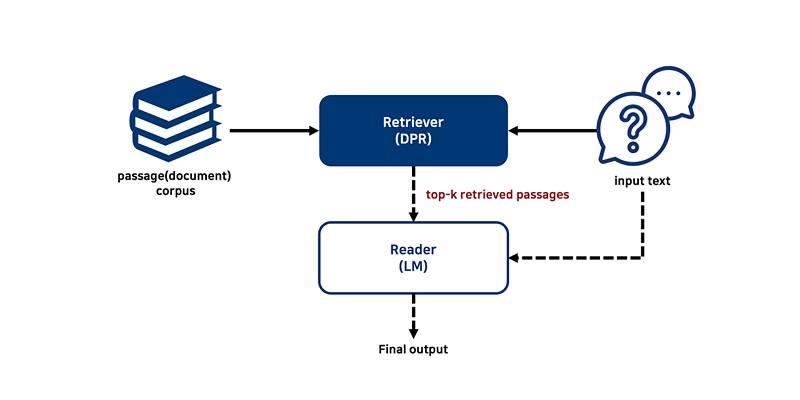
Retrieval-Augmented Generation, or RAG, has become a key method in modern AI applications. It combines large language models with information retrieval to produce grounded, factual answers instead of made-up ones. But what separates an average RAG from a truly intelligent one often lies in how the retriever is trained and fine-tuned. The retriever decides what data is fetched for the generator to reason with. When retrieval is weak, even the most advanced generator struggles to provide meaningful output.
The goal of improving retrievers is not only to find the most relevant chunks of data but also to present them in a way that helps the generator understand context. In other words, a great retriever acts like a skilled librarian—knowing what to look for, where to find it, and how to organize it for clarity.
Fine-Tuning Dense Retrievers For Contextual Precision
Dense retrievers like DPR (Dense Passage Retriever) or Contriever use embedding models to turn text into numerical representations. These embeddings define how the system measures similarity between a question and a potential answer. A basic retriever may rely on pre-trained embeddings, but these often miss the domain nuances your data contains.
To achieve better alignment, retrievers can be fine-tuned on in-domain data—such as company documentation, academic papers, or structured customer FAQs. This training teaches the retriever how context is expressed in that particular domain. It helps the model identify terms that are semantically related, even if they differ in wording.
This step often produces measurable gains in retrieval quality. For example, a retriever trained on medical data will learn that “heart attack” and “myocardial infarction” refer to the same event. Without such fine-tuning, those connections may never be made, causing your generator to produce incomplete answers.
Hybrid Retrieval For Broader Knowledge Coverage

While dense retrievers rely on embeddings, traditional sparse methods such as BM25 still perform remarkably well in some areas. A hybrid retriever blends both. Sparse models excel at identifying keyword overlaps, while dense models grasp contextual meaning. When combined, they provide the best of both systems—precision for rare terms and semantic reach for conceptual understanding.
The hybrid approach can be implemented by assigning weighted scores to the results of both retrievers. You can adjust these weights based on testing outcomes, allowing your model to balance lexical and semantic relevance. Many high-performing RAG pipelines use this method to handle mixed datasets that include technical documents, conversational logs, and structured text.
Query Rewriting To Refine Retrieval Quality
One of the simplest yet most overlooked techniques for improving RAG retrieval involves rewriting queries before sending them to the retriever. Natural queries often lack context, are ambiguous, or contain typos. A query reformulation step helps the model interpret intent clearly.
For instance, if a user asks, “How can I fix the issue with my server?”, the system can reformulate it into “How to troubleshoot common server errors?” This provides a clearer signal for the retriever. You can build query rewriters using small transformer models trained to paraphrase or expand on user input.
Incorporating this stage often increases recall and reduces irrelevant hits. It also leads to cleaner, more useful passages being retrieved for generation.
Multi-Hop Retrieval For Complex Queries
A common challenge in RAG systems is handling questions that require multiple reasoning steps. Single-hop retrieval may fetch isolated chunks, but multi-hop retrieval enables the system to connect information spread across multiple sources.
In a multi-hop setup, the retriever performs iterative searches. It first retrieves one relevant passage, then uses the content of that passage to refine the next query. This chain continues until all necessary information has been collected.
For example, answering “Which company founded the framework used in product X?” might require linking two different documents—one about product X and another about the framework. Multi-hop retrieval builds that bridge automatically.
This process can be computationally heavier but pays off in complex question-answering tasks where single queries fall short.
Re-Ranking For Better Passage Prioritization
Even a powerful retriever can pull in too many passages. Re-ranking helps sort them by true relevance before they reach the generator. Specialized models like monoT5 or cross-encoders are often used for this purpose. They take both the question and the retrieved passage as input and assign a fine-grained relevance score.
This step is especially useful when your retriever indexes large corpora. By trimming the fat and pushing the most valuable content to the top, re-ranking cuts noise, reduces generation errors, and increases factual grounding.
In practice, re-ranking can be viewed as the editorial filter between raw search and the generator’s creative process—it keeps the content sharp and to the point.
Chunk Optimization And Passage Windowing
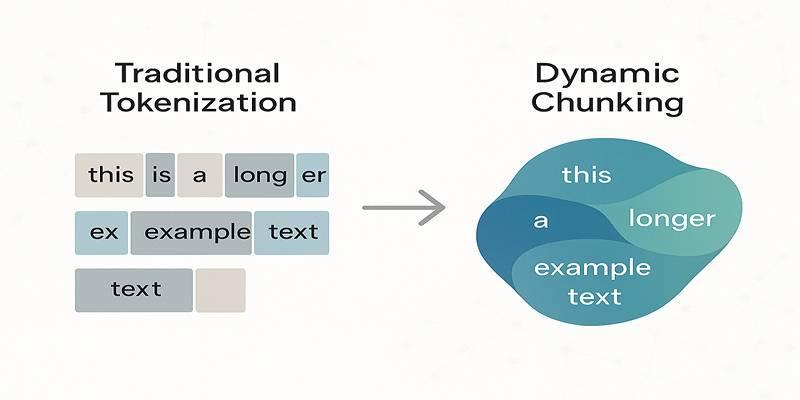
How data is chunked can make or break a retriever’s performance. If chunks are too large, the retriever may struggle to find precise answers. If they are too small, vital context might be lost. Striking the right balance is key.
Dynamic chunking uses semantic segmentation rather than fixed-length splits. It breaks documents by meaning rather than word count, keeping related information together. Passage windowing is another refinement—allowing overlap between chunks so no detail slips through.
These methods lead to smoother retrieval results and better contextual flow for the generator. The generator then gets a cohesive narrative rather than disjointed snippets.
Negative Sampling And Hard Negatives
When training retrievers, it is not enough to teach what’s relevant—you must also teach what is not. Negative sampling introduces misleading passages during training, helping the model learn the boundaries of relevance.
Hard negatives are particularly effective. These are passages that look relevant but are subtly incorrect or unrelated. Training on these examples sharpens the retriever’s discrimination ability. It becomes more selective, learning to spot nuanced differences in meaning.
This practice leads to more accurate retrieval under real-world conditions where many documents share overlapping terminology or structure.
Conclusion
Strong RAG models depend on smart retrievers. Techniques like hybrid retrieval, re-ranking, query rewriting, fine-tuning, and feedback loops all help the system think more like a human researcher—curious, selective, and context-aware. When a retriever learns to fetch not just any answer but the right one, the generator can finally shine. Retrieval may seem like a background step, but it is where true intelligence quietly begins.