Why scene understanding still breaks in everyday images
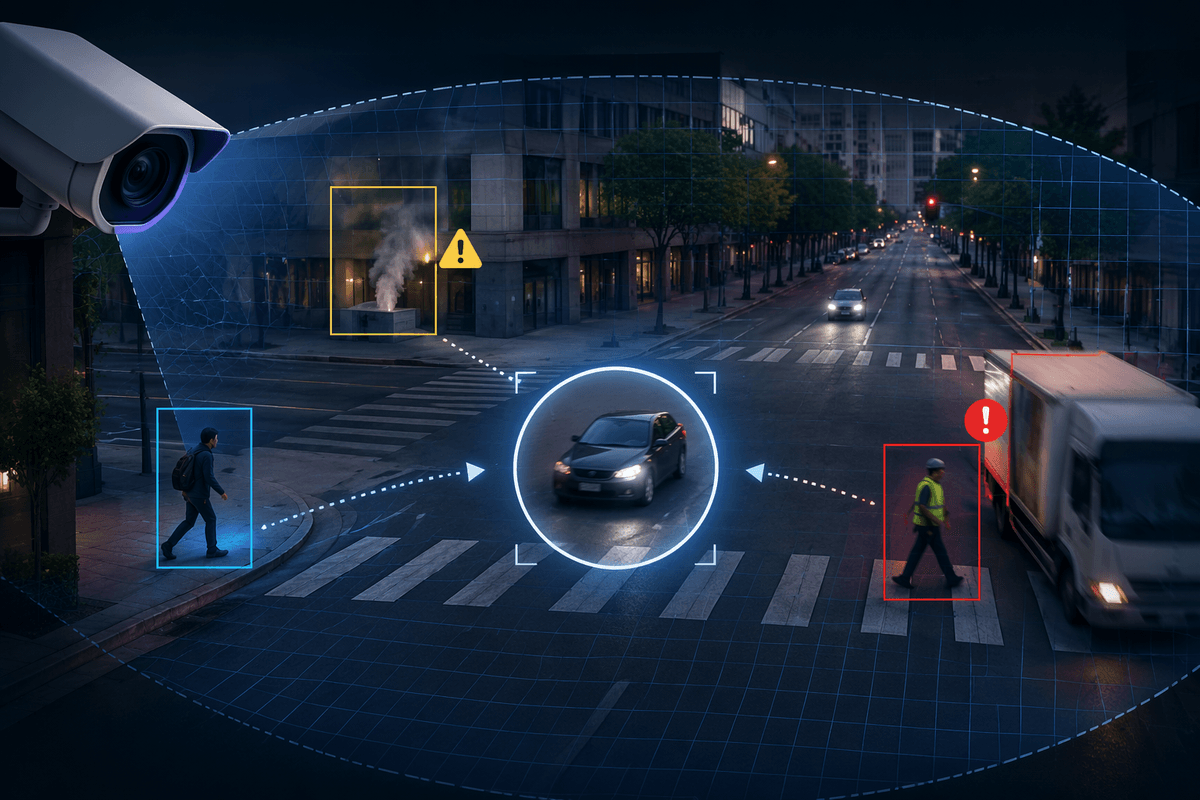
A model can label “kitchen” correctly yet still miss what matters: the pot is boiling over, the stove knob is off, and a glass is about to fall. Everyday images force scene understanding to go beyond object detection into relationships, intent, and hidden causes—what is supporting what, what is interacting, what is risky. Small visual ambiguities compound: reflections on a countertop, an occluded hand, motion blur, or a weird camera angle can flip the story.
The harder part is that these errors often look “reasonable” at first glance, so confidence scores don’t help. Datasets also underrepresent long-tail layouts and cultural variation, so models learn brittle shortcuts (e.g., “table implies dining room”). Fixing this isn’t just “more parameters”; it usually requires a way to re-check a first guess against constraints and context, and that re-check has real costs in latency and compute.
What “Reflection AI” means in vision, not just language
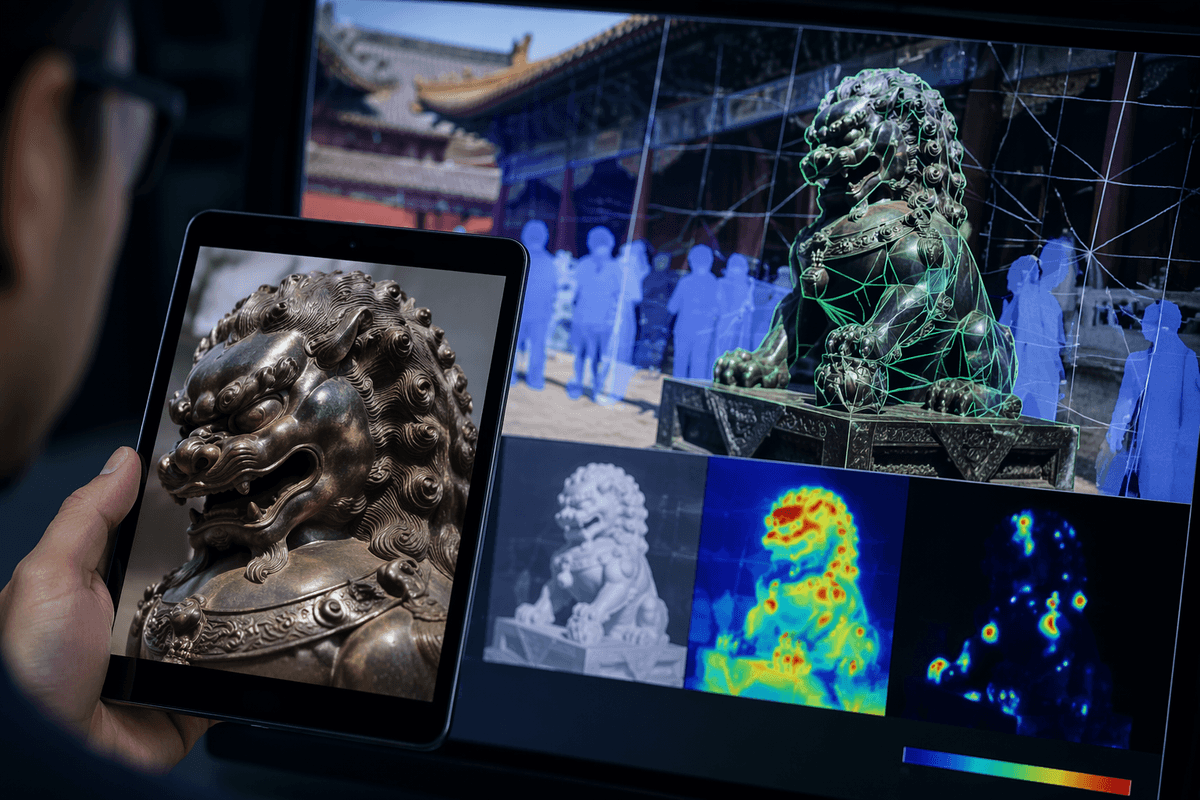
In vision, “reflection” isn’t a model daydreaming extra text about an image. It’s an explicit second pass that treats the first output as a draft, then checks it against the pixels, geometry, and task rules. That can be as simple as re-running the model with a “find contradictions” prompt, or as structured as a separate verifier that asks, “Does the claimed action match the person’s pose?” or “Is that object even visible?”
The key is that the reflective step has to be grounded. It can look back at intermediate features, request more crops at higher resolution, compare multiple candidate parses, or apply consistency checks across detected objects and relations. When reflection works, it corrects mistakes that were locally plausible but globally inconsistent.
You pay extra latency and compute, and if the checker is weak or shares the same blind spots, it can confidently “approve” the wrong story.
Where reflection fits into the scene understanding pipeline
In a typical scene understanding stack, you start with perception (detections, segments, keypoints), then assemble structure (relations, 3D-ish layout, “who is doing what”), and finally map that into the product output (captions, VQA answers, safety flags, robot actions). Reflection fits best where your system is forced to commit to a coherent story: after initial candidates are produced, but before you finalize a decision that’s hard to unwind.
Practically, that means reflecting on (1) the raw parse (“Is the mug actually on the counter or in the hand?”), (2) cross-object consistency (“If the person is ‘pouring,’ where is the container and what’s the pose?”), and (3) task constraints (“Return only visible objects,” “don’t infer brand names,” “risk only if contact is plausible”). It often triggers targeted re-perception—higher-res crops, different thresholds, or an alternate prompt—because rechecking without new evidence tends to repeat the same mistake.
Each reflective loop adds milliseconds to seconds and may require storing intermediate features or extra image crops, which can be expensive in edge deployments and brittle in real-time apps.
Common failure modes reflection can actually fix

You’ve probably seen the same pattern in logs: the model’s first read is “plausible,” but a single relation flips the outcome. Reflection helps most when the error is a contradiction you can test. Classic examples are support and contact mistakes (“on” vs “in front of”), swapped roles (“person holding phone” vs “phone holding person”), and action claims that don’t match pose or object affordances (“cutting” with no knife visible). A checker can force the system to point to evidence: which pixels show the grasp, which region contains the tool, which objects are co-located.
It also helps with missed small objects that are task-critical (stove knob, pill, open flame) by triggering targeted zoom-ins instead of reprocessing the full frame. Another win is category shortcuts: if “dining room” is predicted, the reflective step can ask whether a stove, sink, or cabinets appear and revise the scene label.
What it won’t fix is missing information in the image itself—heavy blur, extreme occlusion, or low light. In those cases, reflection mostly adds cost while repeating the same guess.
Choosing the reflection mechanism: self-critique, verifier, or tool-augmented
A familiar product decision is whether you want “one model, two passes” or “two models, one judgment.” Self-critique is the lightest mechanism: the same vision model (or VLM) generates an answer, then is prompted to find inconsistencies and revise. It’s easy to prototype and can catch obvious contradictions, but it often inherits the same blind spots—especially on fine contact cues and small objects.
A separate verifier is stricter: keep the generator focused on proposing candidates, then use an independent model (or a smaller specialist) to score claims like “hand is grasping cup” or “liquid is pouring” against the image. This tends to reduce overconfident hallucinations, but you pay integration cost: you need a clear interface (what exactly is being verified) and labeled examples of failure cases to tune thresholds.
Tool-augmented reflection sits between: the system can request zoomed crops, run a detector/segmenter, or check geometry rules before it commits. This is often the most reliable for “find the tiny knob” problems, but it’s the most expensive path in latency and engineering, and it can fail when tools disagree or return empty results.
Training and evaluation: measuring gains without fooling yourself
You can make reflection look great on a benchmark by letting the reflective step “see” the label structure. If your verifier is trained on the same annotation style as your test set, it may learn dataset quirks (like typical object co-occurrence) rather than real grounding. The safest setup is to evaluate on distributions you don’t control: new camera types, new homes, different geographies, and especially “negative” images where the tempting relation is wrong (a hand near a mug but not holding it). Log both first-pass and final answers so you can tell whether reflection is correcting errors or just changing outputs more often.
Use metrics that match the product claim. For scene graphs or relations, measure per-relation precision/recall and contradiction rates, not just a single accuracy number. For safety flags, track false positives by scenario class, because reflection can become overly conservative. Add cost accounting to the scorecard: average number of extra crops, tool calls, and milliseconds, since small quality gains can be wiped out by latency and cloud bills.
Deployment realities: latency budgets, safety, and cost controls
A common deployment reality is that reflection rarely fits as a “default second pass” everywhere. If your product has a 150–300 ms budget (interactive search, AR, robotics), one extra VLM call plus a few high-res crops can blow the tail latency even when the median looks fine. Teams usually gate reflection: only run it when the first pass hits known risk patterns (low-margin classifications, contact/action claims, tiny-object hazards) or when the output would trigger an expensive downstream action.
Safety cuts both ways. A reflective step can reduce hallucinated relations, but it can also amplify caution and drive false positives (“might be a knife”) if the verifier is tuned for recall. That shows up as user friction, extra manual review, or unnecessary robot stops. You also need hard limits: max iterations, max crop count, and tool-call timeouts so a few pathological images don’t dominate compute.
Log how often reflection runs, which checks fired, and the marginal quality gain per check; then kill the checks that don’t pay for themselves. Cache intermediate detections and crops across retries, and separate “fast reject” verifiers from “slow confirm” tools so you spend big only on the cases that matter.
A practical path to try reflection on your next vision task
A realistic starting point is a single “reflect or not” gate on your highest-cost mistakes. Pick one outcome you care about (e.g., “is the person holding the object?” or “is a hazard visible?”), then define 3–5 checkable claims and what evidence would satisfy them (a crop, a mask, a keypoint). Run your current model, log the first answer, and only invoke reflection when the answer would trigger action or when simple heuristics fire (tiny-object mention, action verb, low margin).
Keep the reflective step narrow: verify claims, don’t re-generate the whole story. Start with self-critique to map the failure surface, then upgrade to a separate verifier or tool calls only where you see consistent wins. Put hard caps on iterations and crops, and track “quality per millisecond” so a modest accuracy lift doesn’t turn into a latency and cloud-bill surprise. If reflection can’t point to image evidence, treat the output as uncertain rather than “more confident.”